✔ Top quality ✔ Customer focus ✔ Large inventory ✔ Well-equipped machinery
Take the next step – fill in the form and we will get back to you as soon as we can.
Gas cutting – robust and cost-effective cutting of thick materials
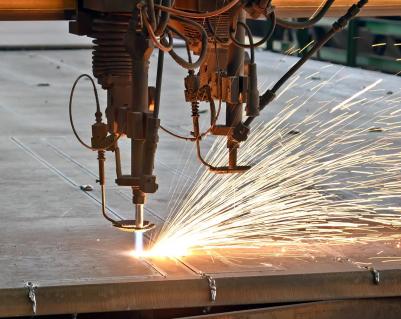
At Bergs Mekaniska we offer gas cutting of plate and steel with high accuracy and reliability. Gas cutting is a proven method for cutting heavy and thick materials, especially common in heavy industry and construction where demands on durability and cost-efficiency are high.
We have long experience delivering gas cut components to customers in the automotive industry, construction, mining, contracting and manufacturing.
Advantages of gas cutting:
Handles very thick materials
Cost-effective for larger series
Robust and well-proven technology
Ideal for carbon steel and heavy plate
Suitable for rough cutting prior to further machining
When is gas cutting suitable?
Oxy-fuel cutting is particularly well suited for cutting carbon steel up to several hundred millimetres in thickness, where other methods such as laser or waterjet are not practical or cost-effective. It is an efficient choice both for rough contours and for preparations prior to CNC machining.
We always work with high quality and careful inspection – whether it’s single parts or larger series. Contact us today to get help choosing the right cutting method for your project.
Here you’ll find answers to the most common questions about gas cutting at Bergs Mekaniska.
What is gas cutting?
Gas cutting is a method where a mixture of gases (often acetylene and oxygen) is used to heat and cut through metal, mainly carbon steel. It is a proven technique for thick materials.
What materials can you cut with gas cutting?
We mainly gas cut carbon steel, which is best suited for this method. Stainless steel and aluminium are better cut with other techniques such as laser or waterjet.
How thick material can you cut with gas cutting?
Gas cutting can handle very thick materials – often up to 200 mm or more depending on the material and requirements.
What is the difference between gas cutting and laser cutting?
Laser cutting is faster and more precise for thinner materials, while gas cutting is best for thick plates and rough cuts where high heat input is not a problem.
Is gas cutting cost-effective?
Yes, gas cutting is a cost-effective option for thick materials and larger series, especially in carbon steel where other techniques are more expensive or don’t work as well.
Is there a lot of post-processing after gas cutting?
For rough cuts, some deburring or machining may be required, but this depends on the cut quality and the requirements of the final product.
How is the material affected by the heat during gas cutting?
Since gas cutting is a thermal process, a heat-affected zone (HAZ) is formed. This is normal for the method but something to take into account for subsequent machining.
Do you help choose the right cutting method?
Absolutely! We are happy to guide you between gas cutting, laser cutting, plasma cutting and waterjet cutting depending on the material, thickness and precision requirements.
Hantera samtycke
För att ge en bra upplevelse använder vi teknik som cookies för att lagra och/eller komma åt enhetsinformation. När du samtycker till dessa tekniker kan vi behandla data som surfbeteende eller unika ID:n på denna webbplats. Om du inte samtycker eller om du återkallar ditt samtycke kan detta påverka vissa funktioner negativt.
Funktionell
Always active
Den tekniska lagringen eller åtkomsten är absolut nödvändig för det legitima syftet att möjliggöra användningen av en specifik tjänst som uttryckligen begärts av abonnenten eller användaren, eller för det enda syftet att utföra överföring av en kommunikation över ett elektroniskt kommunikationsnät.
Alternativ
Den tekniska lagringen eller åtkomsten är nödvändig för det legitima syftet att lagra inställningar som inte efterfrågas av abonnenten eller användaren.
Statistik
Den tekniska lagringen eller åtkomsten som används uteslutande för statistiska ändamål.Den tekniska lagringen eller åtkomsten som används uteslutande för anonyma statistiska ändamål. Utan en stämningsansökan, frivillig efterlevnad från din Internetleverantörs sida, eller ytterligare register från en tredje part, kan information som lagras eller hämtas endast för detta ändamål vanligtvis inte användas för att identifiera dig.
Marknadsföring
Den tekniska lagringen eller åtkomsten krävs för att skapa användarprofiler för att skicka reklam, eller för att spåra användaren på en webbplats eller över flera webbplatser för liknande marknadsföringsändamål.